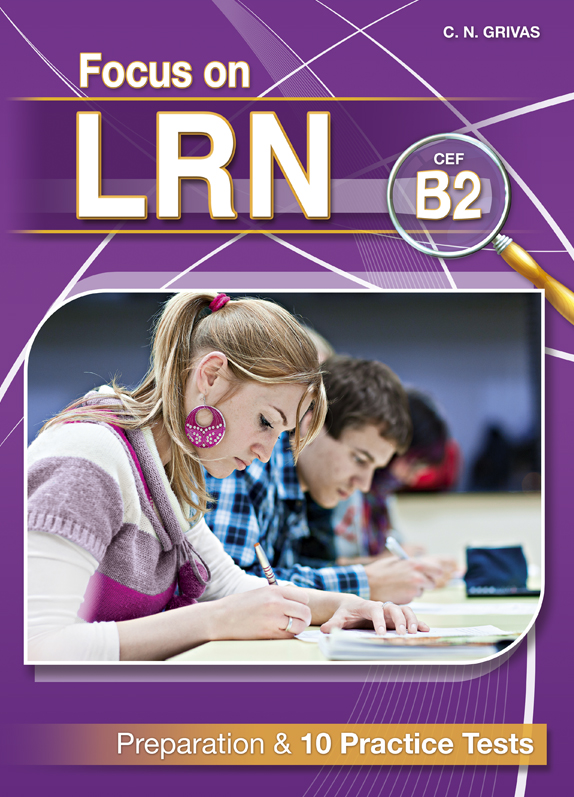
Unlocking ECCE Success: A Deep Dive into Ecce Practice Examinations Book 2
Preparing for the Michigan ECCE (Examination for the Certificate of Competency in English) can feel like a formidable challenge. This globally recognized English language proficiency examination demands a comprehensive understanding of grammar, vocabulary, reading comprehension, listening skills, and writing aptitude. To truly excel, prospective candidates need more than just theoretical knowledge; they require rigorous, targeted practice coupled with invaluable study aids. This is precisely where Ecce Practice Examinations Book 2 steps in, offering a robust and meticulously designed resource to guide students towards achieving their desired scores. Far beyond a simple collection of tests, this book is a holistic preparation tool, integrating critical components like glossaries, model compositions, and derivative charts to foster deep learning and confidence.Ten Full-Length Examinations: Your Pathway to Confidence and Competence
At the core of Ecce Practice Examinations Book 2 are its ten comprehensive practice examinations. These aren't just arbitrary exercises; they are carefully crafted to mirror the actual Michigan ECCE exam format, structure, and difficulty level. Engaging with a full suite of practice tests offers an unparalleled advantage:- Authentic Simulation: Each exam replicates the experience of the real ECCE, allowing you to familiarize yourself with the timing, question types, and overall flow of the test. This reduces anxiety on exam day, as you'll know exactly what to expect.
- Identifying Strengths and Weaknesses: By working through multiple full tests, you can pinpoint specific areas where you consistently perform well and, more importantly, identify sections that require further attention. Is your reading comprehension strong but your grammar weak? Do you struggle with a particular type of listening task? The consistent feedback from these tests helps you refine your study strategy.
- Time Management Mastery: The ECCE is a timed examination, and efficient time management is crucial. Practicing under timed conditions for ten separate exams trains you to allocate your time wisely across different sections, ensuring you complete the entire test without rushing or leaving questions unanswered.
- Building Stamina: A lengthy examination requires mental stamina. Regular practice with full-length tests builds the endurance needed to maintain focus and perform optimally throughout the duration of the ECCE.
Practical Tip: Treat each practice exam as if it were the real thing. Find a quiet spot, set a timer, and avoid interruptions. Afterwards, review your answers meticulously, not just noting incorrect ones, but understanding why they were wrong. This analytical approach is key to turning mistakes into learning opportunities.
Elevating Your Vocabulary: The Power of Integrated Glossaries
A rich and nuanced vocabulary is indispensable for excelling in all sections of the ECCE, from reading and listening comprehension to the use of English and writing. Ecce Practice Examinations Book 2 recognizes this critical need by including a meticulously curated glossary at the end of each unit.Beyond Simple Definitions: English and Greek Synonyms
What sets these glossaries apart is their depth. Instead of mere English definitions, they offer both English and Greek synonyms. This dual-language approach provides immense value, especially for Greek-speaking candidates:
- Nuanced Understanding: Presenting synonyms in both languages helps candidates grasp the subtle differences in meaning and usage between similar words. This is vital for choosing the most appropriate vocabulary in their own writing and for interpreting complex texts.
- Active Recall and Retention: By associating new English words with familiar Greek equivalents and other English synonyms, the brain forms stronger connections, leading to better recall and longer-term retention.
- Bridging the Language Gap: For non-native speakers, having direct Greek translations can quickly clarify the meaning of an unfamiliar English word, allowing them to focus on its usage and context within the ECCE framework. This accelerates the learning process without sacrificing depth.
- Contextual Learning: Since the glossaries are integrated within units, the vocabulary is presented in the context of the practice examinations themselves. This helps students understand how words are used naturally in sentences and passages, rather than just memorizing isolated definitions.
Actionable Advice: Don't just read the glossaries. Actively engage with them. Create flashcards for challenging words, write your own sentences using new vocabulary, and try to incorporate these words into your daily English practice. For even more intensive practice, you can delve deeper into specific strategies to Master the Michigan ECCE with Book 2's 10 Practice Exams, focusing on how vocabulary acquisition intertwines with test-taking.
Mastering the Art of Writing: Brainstorming and Model Compositions
The writing section of the ECCE often proves to be one of the most challenging for candidates. It requires not only grammatical accuracy and a wide vocabulary but also logical organization, coherent argumentation, and appropriate style. Ecce Practice Examinations Book 2 provides invaluable support here through its inclusion of brainstorming techniques and model compositions.From Ideas to Eloquence: Guided Composition Practice
The journey from a blank page to a well-structured essay can be daunting. This resource helps bridge that gap:
- Structured Brainstorming: The brainstorming sections guide you through the process of generating ideas, organizing thoughts, and outlining your arguments before you even begin writing. This crucial first step ensures your essay has a clear direction and logical flow, preventing rambling or disjointed narratives.
- Learning from Exemplars: The model compositions serve as excellent examples of high-scoring essays. By analyzing these models, you can learn about:
- Effective Introductions and Conclusions: How to hook the reader and provide a strong summary.
- Paragraph Development: How to construct well-supported paragraphs with clear topic sentences and evidence.
- Transition Words and Phrases: The glue that holds an essay together, ensuring smooth transitions between ideas and paragraphs.
- Varied Sentence Structure: Techniques for making your writing more engaging and sophisticated.
- Appropriate Tone and Register: How to adapt your writing style to different essay prompts.
- Identifying Common Pitfalls: By comparing your own attempts with the model compositions, you can identify common grammatical errors, awkward phrasing, or logical inconsistencies in your writing.
Strategic Approach: After brainstorming for a given prompt, try writing your own essay. Then, compare your work with the provided model composition. Focus not just on what you missed, but on *how* the model achieved its effectiveness. Rewrite sections, imitating techniques you admire, and seek feedback from teachers or peers. This iterative process is crucial for refining your writing skills.
Decoding Word Formation: The Advantage of Derivative Charts
Understanding word formation is a secret weapon for expanding your vocabulary and mastering the Use of English section of the ECCE. Ecce Practice Examinations Book 2 thoughtfully includes derivative charts to aid in this critical area.Expanding Your Lexical Range Systematically
Derivative charts are powerful tools that help you see the relationships between words. They typically list a base word and then show its various forms as nouns, verbs, adjectives, and adverbs (e.g., develop - development - developing - developed - developmentally). The benefits of studying these charts are immense:
- Systematic Vocabulary Expansion: Instead of learning words in isolation, derivative charts teach you entire word families. If you know the verb "to create," you can easily deduce the noun "creation," the adjective "creative," and the adverb "creatively." This multiplies your vocabulary much faster.
- Enhanced Use of English: The "Use of English" section often tests your knowledge of word forms and parts of speech. Derivative charts directly prepare you for these types of questions, helping you correctly choose between, for instance, "economical" and "economic," or "industrial" and "industrious."
- Improved Reading Comprehension: Recognizing different forms of a word in context allows for quicker and more accurate comprehension of complex texts.
- Grammar Reinforcement: Understanding how words change form according to their grammatical function reinforces your knowledge of English grammar rules, particularly concerning prefixes, suffixes, and word endings.
Study Method: Actively engage with the derivative charts. Don't just passively read them. Create your own sentences using different forms of the same word. Pay attention to common prefixes (e.g., un-, re-, dis-) and suffixes (e.g., -tion, -ment, -able, -ly) and how they change a word's meaning or part of speech. This systematic approach will truly help you Achieve ECCE Success: 10 Practice Exams and Study Tools in Book 2.
Integrating Ecce Practice Examinations Book 2 into Your Study Plan
The true power of Ecce Practice Examinations Book 2 lies in its comprehensive integration of all these features. It's not just a book of practice tests; it's a complete study ecosystem designed for optimal ECCE preparation.Here’s how you can make the most of this invaluable resource:
- Start with a Diagnostic Test: Take one of the practice exams under timed conditions to get a baseline assessment of your current proficiency and identify initial weak areas.
- Targeted Review: After scoring your test, review all incorrect answers. For vocabulary questions, consult the unit's glossary. For writing, analyze the model compositions. For Use of English, cross-reference with the derivative charts.
- Systematic Vocabulary Building: Regularly review the glossaries, creating personalized lists of new words, their synonyms, and their Greek equivalents. Practice using them in sentences.
- Dedicated Writing Practice: Utilize the brainstorming sections for every writing prompt. Write your own compositions, compare them with the models, and refine your work.
- Master Word Formation: Consistently study the derivative charts, understanding how base words transform into different parts of speech. This will boost both your vocabulary and grammar.
- Iterative Testing: As you progress, take more practice exams to monitor your improvement and identify any remaining gaps in your knowledge. Adjust your study focus accordingly.
In conclusion, Ecce Practice Examinations Book 2 is far more than a collection of sample tests. It is an indispensable guide for anyone aiming to conquer the Michigan ECCE. By providing rigorous practice through its ten full-length examinations, fostering deep vocabulary acquisition with dual-language glossaries, honing writing skills with brainstorming and model compositions, and demystifying word formation with derivative charts, this book offers a holistic, strategic pathway to success. Invest in this comprehensive resource, commit to diligent study, and step confidently towards achieving your ECCE goals.